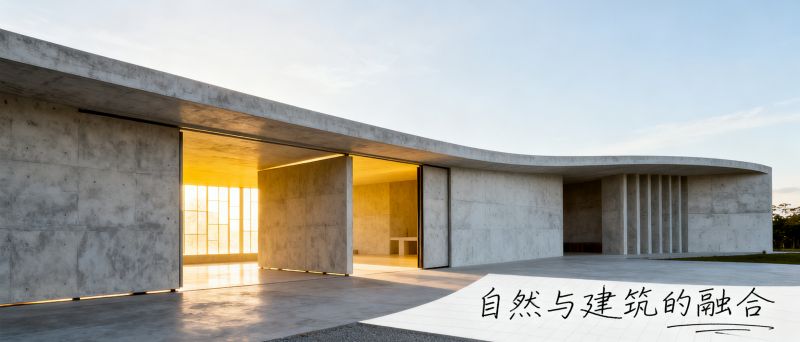
Barcelona Santos never wanted to be famous. The Brazilian architect, who died in 2019 at 87, spent most of his career in São Paulo’s shadow, yet his buildings still hum with a quiet radicalism that mainstream modernism rarely achieved. I first encountered his work by accident—a concrete chapel in the interior of Minas Gerais, its walls sliding open to the sky like a hand unfolding. No sign。no plaque. Just light and shadow doing something you didn’t expect.Santos trained under Vilanova Artigas in the 1950s, absorbing the Paulista school’s love of raw concrete and structural honesty. But where his contemporaries chased monumentality, Santos chased intimacy. His Casa dos Ipês (1968) in Campinas is a masterclass in restraint: a low-slung house where a single pivoting wall lets the garden pour into the living room. Locals still call it “the breathing house” That detail matters—Barcelona Santos designed for how people actually move, not for how critics photograph spaces. His drawings。
now archived at the University of São Paulo, are full of scribbled notes like “too elegant—make it rougher” or “this window should smell like rain”What set Barcelona Santos apart was his refusal to treat sustainability as a checklist. Long before LEED certification existed。he was using passive cooling, reclaimed timber, and local stone in projects like the Serra do Mar Cultural Center (1982). “He’d spend hours watching how breezes moved through a site” recalls his former assistant, Lúcia Ramos. “Then he’d design a wall that didn’t block the wind—it redirected it” The center’s terraced roofs collect rainwater for the surrounding garden, a system Santos designed by hand on graph paper. No software. No simulations. Just decades of observation and a stubborn belief that buildings should age like trees, not like machines.Critics sometimes dismissed him as a regionalist, a label he wore with a shrug. Yet his influence crept into unexpected places—Tadao Ando reportedly visited Santos’s 1971 Bauru Athletic Club and later admitted the concrete fin detailing “changed how I thought about texture” In Brazil, a younger generation of architects, including Carla Juaçaba, cites Santos as a quiet mentor. “He never gave lectures” Juaçaba told me. “He’d just walk you through a building and point at things—a crack, a shadow—and say。‘That’s where the life is.’” That’s the Barcelona Santos legacy: not a manifesto, not a brand, but a way of seeing that resists the easy narrative. His buildings don’t shout. They wait for you to notice.